This page is a study note in our own words. It is not the book, not a substitute for it, and not affiliated with the author or publisher. If the ideas help, buy or borrow the original.
Map
These are private notes of an emperor training the ruling faculty. An event is not yet good or bad. Your assent is.
The inner citadel is the part fortune cannot take. View from above and memento mori right-size what the day throws.
The trap is adding a second injury in judgment. The sting happens. Then you write a story that hurts twice.
The life is to pause at the sting, drop the extra sentence, and do the duty of the role. Keep the citadel in this hour.
Theory
You live in a body that will die, among people who will annoy you, in a world you do not run. Most of the extra suffering is not those facts. It is the sentence you add: "this should not be,""this proves I am owed,""this is the end of me."Marcus Aurelius wrote Meditations as notes to himself — a private journal, which is why the same ideas keep returning until they stick. What is yours is the ruling faculty: the power to assent or not to the thought that just arrived.
An event is not yet good or bad. Your judgment of it is. If you add "this should not be," you suffer twice. If you meet it as nature meeting nature, you still have work, but you have not set yourself at war with the day. Take away the opinion, and the complaint goes with it — not because pain is imaginary, but because the second wound is optional. External things knock. Assent is yours.
Until you treat the next irritation as a test of assent, not as a referendum on the universe, the rest of the book is literature. The first move is to catch the extra sentence before it becomes the hour.
Insight 1 of 5
Pause at the Sting and Drop the Extra Sentence
The Harm Is Often the Judgment — Not the Event
Use when: something goes wrong or someone is rude and your mind jumps to "this should not be" or "I am ruined."
Steps
Stop at the first sting. Before the story grows, name only the impression. "It seems the plan failed." "It seems I was dismissed." "It seems the body is failing." No therefore yet.
Ask where the harm lives."Is the harm in the world, or in the sentence I just added?" Circle the extra line: *therefore I am owed, finished, disrespected as a self.*
Drop the sentence if it is not needed. Say: "I can refuse this assent." The fact can stay. The catastrophe clause does not have to.
Replace the verdict with a task."What is the next decent act with what remains?" One call. One hour of work. One true reply. Then do that, not the inner theater.
You'll know it worked when the sting is still there but the extra sentence did not run the next hour.
Theory
Everything flows and changes. The universe is transformation; life is opinion. Marcus returns to this when fame, insult, or loss tempt him to treat passing things as permanent emergencies. View from above helps: imagine the city from a height, the centuries as a stream, your troubles as one ripple. Look at the stars. Look at the meat on the plate. Look at the purple robe as dyed cloth. See what things are and stop inflating them. The goal is not coldness. The goal is accurate weight.
Fame and obscurity both pass. The names that filled the court are dust. That is not a reason to do nothing. It is a reason not to spend the ruling faculty on inflating what will not keep. Preferred things — health, reputation, comfort — can be pursued. They are not the seat of a good life. Virtue is: justice, temperance, courage, wisdom in the next act. If you treat a breakable thing as unbreakable in your heart, every ordinary day will feel like betrayal.
Once the trouble has its real size, you can work. While it fills the sky, you can only panic. That is why the next move is a change of scale, not a better argument with the feeling.
Insight 2 of 5
Right-Size the Trouble From Above and From Later
View From Above — Accurate Weight
Use when: a problem feels like the whole world, or a slight feels permanent.
Steps
Run the height view for one minute. Picture the street, the city, the years. Your scene is one room in that. Say: "This is a ripple, not the ocean."
Name the thing as it is, not as a title. The insult as sound. The loss as a change. The robe as cloth. "What is this made of?" Strip the glamour and the doom.
Add time."How large will this be in a week? In ten years? After I am gone?" Write one honest sentence. The point is proportion, not dismissal.
Return to the sized task. Now that it is not the sky, what is the next just act? Do that. Do not rebuild the monument.
You'll know it worked when the problem feels like something that happened in a life — not like the whole of life.
Theory
People do wrong from ignorance of good and evil, or from habit, or because they cannot see what you see. When someone is rude, remember you have been rude. Their nature is to do that; yours is to stay just. Anger at a person is often anger at a person who must be as they are. That does not mean approve harm. It means do not waste the ruling faculty on rage that adds a second injury inside you.
Marcus tells himself, in the morning, that he will meet the meddling, the ungrateful, the arrogant — and that they share the same human source. Withdrawal into contempt is its own failure. We are made for cooperation, like feet, like hands. Meet people where they are. Teach if you can. Endure if you cannot. Always return to your own standard rather than theirs. Justice is not a debate. It is what you do with the situation that remains: protect, correct, leave — without the inner theater of being a wounded god.
The next move is to do the decent act toward others and toward the remaining work, without requiring that they become reasonable first.
Insight 3 of 5
Do the Decent Act Without Inner Theater
Their Nature Is Theirs — Yours Is to Stay Just
Use when: someone is rude, unfair, or foolish, and anger is offering to run the rest of the day.
Steps
Expect humans in the morning. Say: "I will meet difficulty in people today. That is not a glitch in the world." You are less ambushed when you stop demanding a court of sages.
When the slight lands, remember your own."I have done this kind of thing." Not to excuse them. To drop the pose of being a different species.
Choose the just act, not the rage hobby. Protect. Correct. Leave. Work. "What would a decent person do with what remains?" Do that in the next hour.
Do not rehearse the portrait of their soul. Return to your standard. Their mind is not yours to command. Your next act is.
You'll know it worked when you handled the situation and did not donate the afternoon to the case against them.
Theory
Duty is concrete. You were born to act, as a fire's nature is to burn. When you want to stay in bed, ask what the role requires — parent, worker, friend, citizen, caregiver — and do the next piece without needing applause. Marcus is an emperor reminding himself not to hide in philosophy as a costume. Waste no more time arguing what a good person should be. Be one.
Memento mori belongs to duty, not only to gloom. This hour may be the last. Do the task in front of you as if it were the last, without theatrics. You do not have ten thousand years. The work of virtue is available in any weather — fame or obscurity, health or sickness. Social life is not optional. The good is not a feeling of specialness. It is the next piece of the role, done cleanly.
Waiting to feel like the role is how the morning is lost. The ruling faculty does not need a better mood. It needs the next honest act.
Insight 4 of 5
Do the Next Piece of the Role Without Applause
Be the Good Person — Don't Argue the Job Description
Use when: you are hiding in bed, in theory, or in resentment of the part you were given.
Steps
Name the role you are actually in today. Not the one you wanted. "I am the one who has this work / this child / this body / this post."
Ask what the role requires in the next hour. One piece. Get up. Keep the word. Do the file. Make the meal. "What does a decent person in this part do now?"
Do it without a speech and without an audience in your head. No martyrdom. No philosophy lecture. The act is the argument.
Use death as a deadline, not a mood."I do not have ten thousand years. While I can, I will do this." Then do this. Stop decorating the thought.
You'll know it worked when the next piece of duty is done — not when you felt noble about the role.
Theory
The inner citadel is the place nothing external can enter unless you let it. Noise, rumor, pain, even death knock on the gate; assent is yours. Marcus practices this in small irritations because the big blows are trained the same way. Do not wait to become a philosopher. At the next friction, pause and keep the gate.
Death is not ahead like a distant cliff. It is in every day you have already spent. To study death is to unlearn the panic that makes you obey every fear. Bodies turn to ash, names to stories. What matters is whether you used the ruling faculty well in the days you had. Providence or atoms — whether the world is ordered or accidental — the job does not change: do not be a wretch in your judgments; do the just thing; accept what falls outside your command.
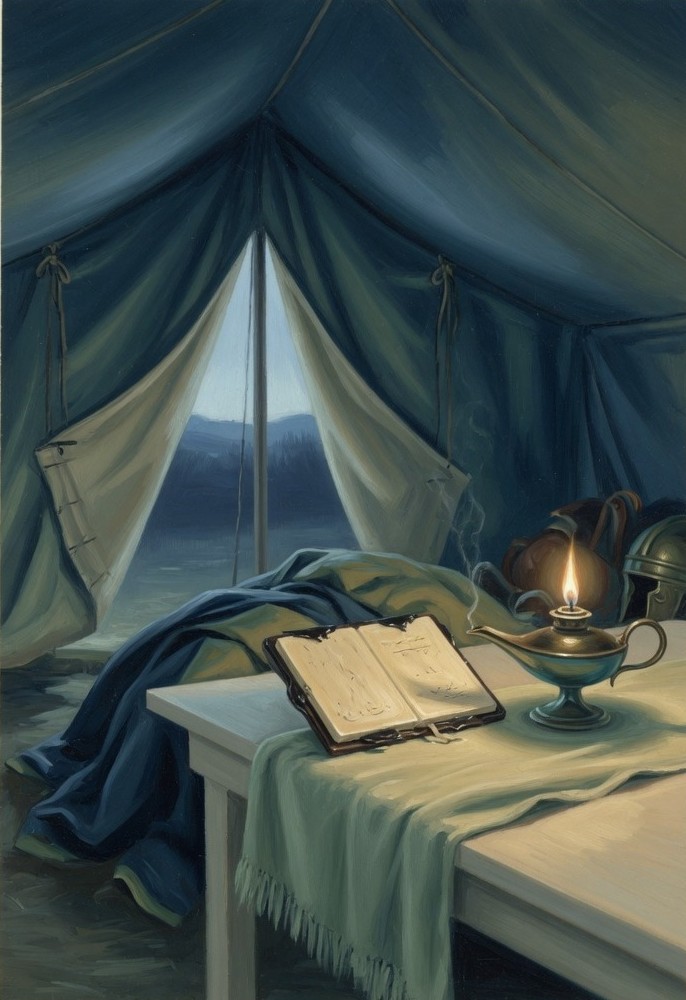
He writes at night so he will not forget in the morning, when the court opens and the same tests return in new costumes. The test is not feeling serene. It is whether you governed the assent and did the duty in the hour you actually had. That repetition is the whole of the *Meditations*.
Insight 5 of 5 · Today
Keep the Inner Citadel in Today's Small Collision
Nothing Gets In Unless You Assent — Practice on This Hour
Use when: a minor annoyance, a rumor, a pain, or a fear of death is about to take the gate.
Steps
Treat the irritation as assigned practice. The delay. The slight. The ache. The news. Say: "This is today's training for the citadel."
Let it knock. Do not automatically open."The leg hurts" is allowed. "I am ruined" is a different visitor. Name which you are admitting.
Do one act from inside the gate. Tone without venom. Return to the task. Kindness without needing the world to be kind first. "The ruling faculty is still mine."
Close the day with one line if it helps."Today I refused one extra sentence. I did one duty." Not a sermon. A receipt for the night, so morning has something to remember.
You'll know it worked when a blow or a petty friction passed without handing over the whole inner say.
This page is a study note in our own words. It is not the book, not a substitute for it, and not affiliated with the author or publisher. If the ideas help, buy or borrow the original.