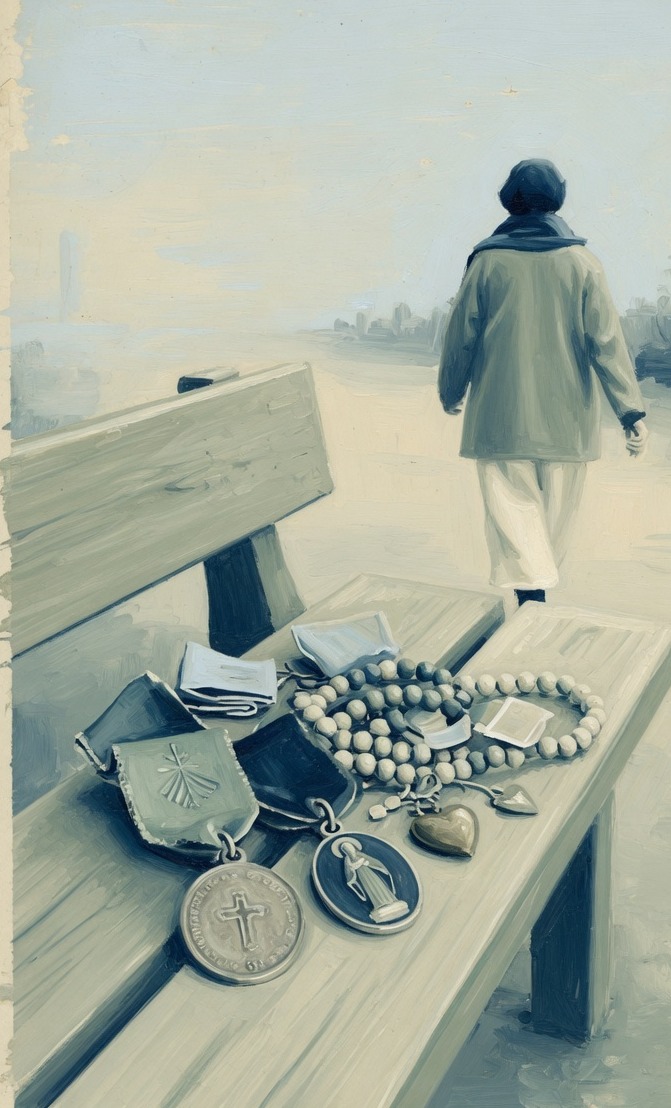
Spiritual materialism is using the path to dress the self instead of to see through it. Ego can convert insight, sitting, and compassion into property.
This page is a study note in our own words. It is not the book, not a substitute for it, and not affiliated with the author or publisher. If the ideas help, buy or borrow the original.
Map
Spiritual materialism is using the path to dress the self instead of to see through it. Ego can convert insight, sitting, and compassion into property.
The work is to uncover what is already here, not to build a spiritual identity.
The trap is collecting experiences, teachers, calm, and vocabulary as a better mask.
The life is to sit the hard ordinary way, drop display, and come down to earth after sitting. Practice gets quieter, less explained, more accurate.
Theory
Cutting Through Spiritual Materialism is Chögyam Trungpa teaching in Boulder while opening a meditation center — talks from 1970–71 aimed at Western students who wanted transformation and also wanted credentials, experiences, and a look. Spiritual materialism is the distortion: you think you are developing when you are strengthening egocentricity through spiritual techniques. The cushion as identity. The teacher as accessory. The calm as a better mask. The vocabulary as armor.
Ego, here, is not the self-esteem story. It is the constant organizer that turns everything — including insight — into property. "I have seen emptiness." "I am advanced." "I am humble." Each claim is a new costume. Trungpa uses the three lords of materialism. The Lord of Form hunts physical comfort and the right environment as if the right stuff could end struggle. The Lord of Speech uses intellect and belief-systems to filter direct perception — a philosophy as a bunker. The Lord of Mind uses spiritual states themselves as refuge: a peaceful sit, a high, a numbness, a "being in love" you try to live inside. All three entertain, then demand more.
The Buddhist approach in this book is uncovering, not building up. Enlightenment is not produced. It is like sun from behind clouds. The work is to stop shopping for a self that would not need the work.
Insight 1 of 5
Drop One Piece of Display Around the Practice You Already Have
No Announcement, No Trophy
Use when: sitting, studying, or "being on the path" has a second job — proving you are the kind of person who does this.
Steps
Catch the costume. The need for people to know you practice. The comparison with other students. The inner trophy after a "good" sit. The vocabulary used as rank.
Do the practice you already have — smaller and quieter. Same sitting. Same work. No post. No explanation. No humblebrag. If that feels like a loss, you have met the materialism.
Refuse one lord for a day. Form: stop rearranging the room as if the right lamp will save you. Speech: stop using the teaching as a take. Mind: stop chasing a state and sit what is here.
Keep going without the credit. Cutting through is not a peak. It is the daily refusal to sell the path back to ego.
You'll know it worked when practice got quieter and you still did it.
Theory
Before teacher and student can meet, Trungpa talks about surrender. Surrender is not a soft landing. It is landing on ordinary ground — rocky, disappointing, without the fascination of a spiritual movie. You present whatever you actually are, not a worthwhile student. Hopes, fears, and the impressive version all get dropped. If you only open in order to get something wonderful, ego is still shopping.
He prefers spiritual friend to celebrity guru. The point is communication, not collection of blessings. Guru addiction is gathering initiations instead of changing. Anti-guru cynicism is also ego protecting itself. Tests will look like disappointment — including the doubt that the friend cares. That disappointment is often the hypocrisy of ego being worked. Initiation (abhisheka, anointment) requires a vessel. If the vessel is already full of "I am a great student," nothing can be poured. The true meeting of minds, he says, is completely ordinary. Not a fireworks transmission you can put on a shelf.
Insight 2 of 5
Present the Raw Mind, Not the Impressive Student
Open Without a Pitch
Use when: you are managing how you look to a teacher, a group, or your own spiritual résumé.
Steps
Name the pitch."I want to be seen as sincere / advanced / humble / special." That pitch is the costume. Set it down before you sit or speak.
Tell the plain truth of the mind. Hungry, proud, afraid, petty, tender. One honest sentence. Not a performance of honesty.
Let disappointment be part of the path. The sit was boring. The teacher was ordinary. The insight did not arrive. Do not shop for a better vendor. Stay.
Become a vessel, not a collector. One practice. One relationship. No extra initiation-hunting. Full hands cannot receive.
You'll know it worked when you showed the actual mind and did not rush to improve the photo.
Theory
Self-deception is wanting to witness your own funeral — to be the one who watches the self disappear and still get credit for the disappearance. A genuine moment of openness happens. Immediately you evaluate it as extraordinary and try to capture it. The capture breaks the unity. Ego is always trying to achieve spirituality.
The hard way is not macho. It is refusing the shortcut of comfort-spirituality — the path that always arranges a cushion under the fall. You work with boredom, irritation, and the embarrassing mind without upgrading them into a special story. The open way is mahayana warmth: not using practice to escape relationship. Irritation with others is data, not an interruption.
Sense of humor is panoramic. It does not take sides. It is the opposite of a holy face that never smiles because suffering is so important. When the spiritual project becomes grim and self-important, humor cuts it. When a moment of openness becomes a trophy, humor cuts that too. The mouse that cannot drag the turquoise, then calls friends, then finally moves it — life is already ridiculous. You can sit inside that without a brand of wisdom.
Insight 3 of 5
Don't Collect the Spiritual Moment
If You Can Frame It as a Trophy, Ego Already Grabbed It
Use when: a sit, a cry, an insight, or a "powerful experience" just happened and you are turning it into proof.
Steps
Notice the capture."That was a real one. I should remember this. I am getting somewhere." The second thought is the theft.
Let the moment be ordinary. Return to breath, dishes, walking. Do not write the memoir in your head. Do not tell it until the telling is clean of rank.
Use humor on the holy face. If you have become grim, special, or easily offended on behalf of your path, you are in costume. Laugh. Sit anyway.
Treat irritation as data. The person who annoys you is not an obstacle to practice. They are the practice. Stay in the relationship without using emptiness as an exit.
You'll know it worked when an opening happened and you did not need it to mean you had arrived.
Theory
The second half of the book walks the path itself so you can see where materialism hides at each stage. Development of ego and the six realms describe the styles of imprisonment — hunger, aggression, pride, jealousy, stupidity, and the rest — not as cosmologies to collect, as moods you already know. The Four Noble Truths are not a slogan. Suffering is real. Its engine is grasping. Cessation is possible. The path is walked, not owned.
Hinayana discipline, in Trungpa's teaching language, is sit, face boredom, stop pretending your confusion is special. Method. Container. Mahayana is the bodhisattva path: compassion that includes others, not a self-improvement project that happens to be kind in public. Sentimental compassion protects your image as a helper. Real compassion sees clearly and acts. Prajna cuts the wall between you and what is actually there. Shunyata (emptiness): form is empty of your preconceptions; emptiness is not a special state you can hold; if you dwell in "I am experiencing emptiness," that is more costume.
Insight 4 of 5
Sit Through Boredom Without a Special Story
The Hard Ordinary Way
Use when: practice is dull, irritating, or not producing a state, and you want to upgrade that into meaning or quit for a more exciting path.
Steps
Sit the period you said you would. Restlessness counts as sitting if you stay. Boredom is not a sign you picked the wrong teaching.
Drop the story that your confusion is interesting. It is ordinary confusion. Everyone's. That is the point. Stop curating it.
When irritation at others arises, stay. One decent act. One bit of real help without a helper identity. Compassion as behavior, not as a look.
Do not dwell in a blank as if blank were enlightenment. If you catch "I am so empty / so present," return to the next breath as if you were a beginner.
You'll know it worked when you completed ordinary practice without needing it to feel like a breakthrough.
Theory
The book ends in tantra / vajrayana language: not floating off the earth, coming down onto it. The higher you go, the more ordinary the ground. At some point even dwelling in shunyata falls away and form is vivid — a flower not as a concept, as brilliance. Prajna becomes jnana, wisdom as direct seeing. Tantra transmutes energy rather than pretending you have transcended it. That teaching is easy to steal as a new trip. Trungpa's warning stays in force at the top of the path: the last seduction is "I have achieved something."
Meditation begins by penetrating the neurotic thought-pattern at the fringe of ego, then the heavy meaningfulness of concepts, then space, then a direct link with life. Those three steps are the three yanas in plain clothes: method, space, energy. You do not shop among them. You let each cut a layer of pretense. Then you get up. Wash dishes. Argue fairly. Pay debts. Spiritual vanity is socially rewarded. People praise the performance and miss the theft. The theft is always the same: using the path to feel superior instead of to be honest. You are already what you are trying to become. The work is to stop shopping.
Insight 5 of 5 · Today
Get Up and Do the Next Ordinary Thing Without the Holy Face
The Higher You Go, the More You Come Down to Earth
Use when: sitting has made you nicer in public, crueller in private, or slightly above the dishes.
Steps
After the sit, pick the next ordinary task. Dishes. A bill. A fair argument. A debt. Do it without announcing that it is "practice."
Check private versus public. If the path improved the image and not the kitchen, you are collecting. Repair the kitchen.
Suspect spiritual success. If you need to be known as the one who sees, you have been seduced by the last costume. Laugh. Return.
Live, don't represent a brand of wisdom. The test is accuracy — hungry, proud, afraid, and still decent — not a peak experience you can describe.
You'll know it worked when you can laugh at your own holy face and still sit, then still wash the bowl.
This page is a study note in our own words. It is not the book, not a substitute for it, and not affiliated with the author or publisher. If the ideas help, buy or borrow the original.